Our CT-guided interventions
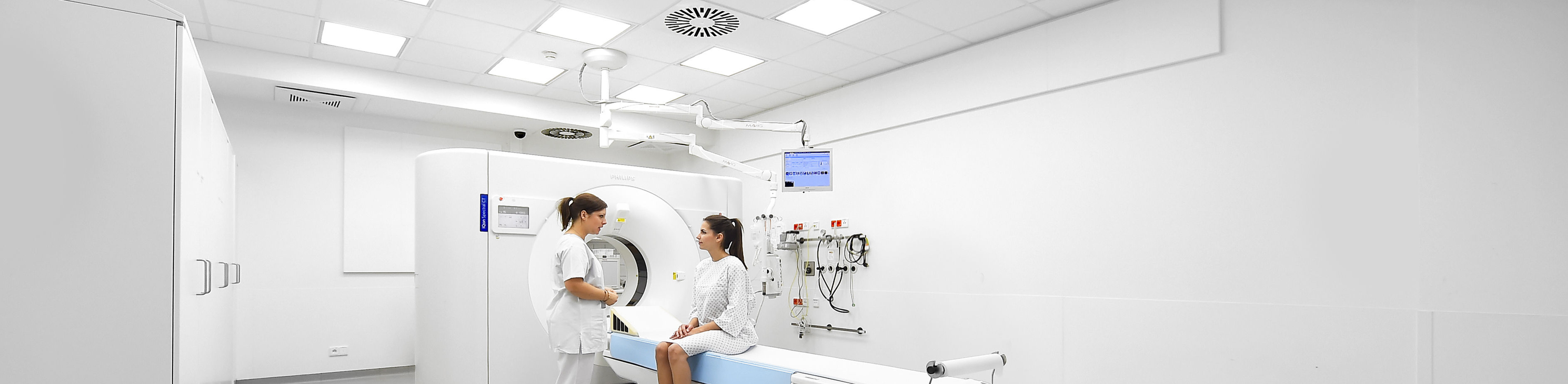
Using CT guidance, we can target abnormalities with millimetre precision and obtain tissue samples. This is especially useful for deep-seated or hard-to-reach lesions and enables reliable diagnosis.
For planned surgical procedures or radiation therapy, we place precise markers so the target area can be reached as accurately as possible.
Drainages are thin tubes used to remove fluid from the body, for example after surgery or in the context of inflammation. Using CT guidance, we place drainages with particular safety and precision, for example in:
- Fluid collections after abdominal or thoracic surgery
- Urinomas
- Intra-abdominal abscesses
- Pneumothorax or pleural effusion after lung procedures
- Collections associated with pancreatitis
CT guidance ensures optimal placement even in complex anatomical situations.
Thermal ablation - targeted destruction of abnormal tissue
Microwave ablation is a minimally invasive procedure in which tumour tissue is destroyed using precisely applied heat. A thin probe is inserted under CT guidance directly into the lesion. Microwave energy then generates intense local heat, allowing the tumour – for example in the liver – to be locally “cooked” and destroyed without the need for major surgery.
Cryoablation is a modern technique in which tumour or lesion tissue is destroyed through controlled freezing. A probe forms an “ice ball” that freezes and kills the abnormal cells while preserving the surrounding healthy tissue as much as possible.
Applications at our centre:
- Renal cell carcinoma
- Selected liver tumours
- Bone and soft-tissue metastases
- Selected sarcomas
- Benign tumours (e.g., osteoid osteoma, desmoid, endometriosis lesions
Whether thermal ablation is the best treatment option is always determined interdisciplinarily.
At our tumour boards, radiology, surgery, oncology, gynaecology, urology, pathology and additional specialties jointly decide the optimal therapy for each individual patient.