
Interventional radiology
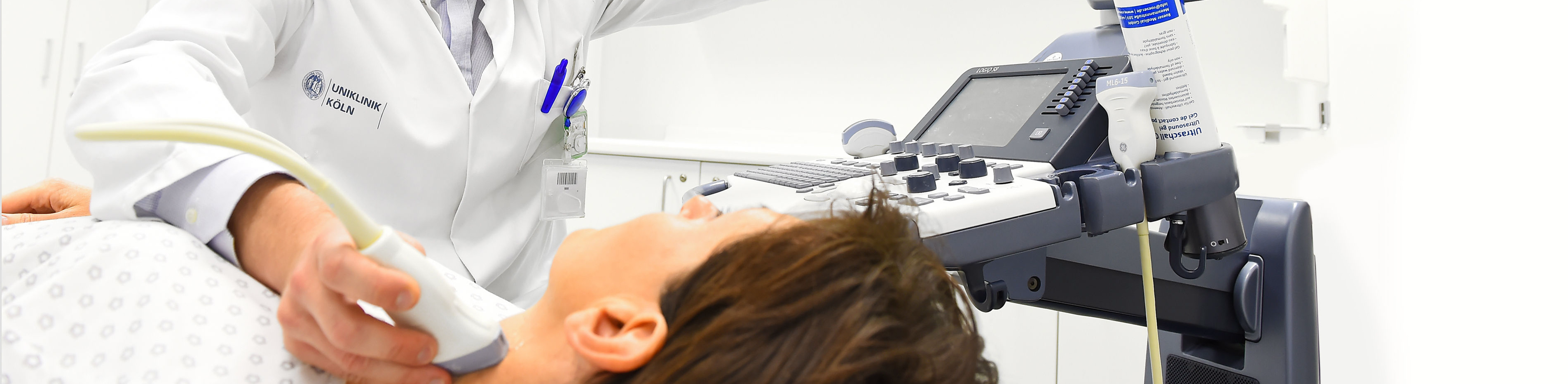
Interventional procedures refer to examinations that go beyond the mere visualization of certain regions of the body as part of the diagnosis. Using radiological techniques such as digital subtraction angiography (DSA) in X-ray examinations, sonography, computed tomography, magnetic resonance imaging, etc., structures located inside the body can be visualized very precisely and sometimes in real time and can therefore be accessed in a safe and controlled manner in order to take tissue samples or carry out treatments. In contrast to surgical procedures, instruments such as puncture needles or catheters are used, which are inserted through the skin and controlled by the interventional radiologist using radiological procedures. In most cases, this only requires a small incision in the skin, meaning that these procedures are usually performed under local anesthesia. For some methods, such as radiofrequency ablation (RFA) or microwave ablation (MWA), anesthesia may also be necessary.


Interventional procedures
Below you will find an excerpt of the interventional procedures we offer as well as more detailed descriptions if a link is available.
- HIFU Center: High-intensity focused ultrasound (HIFU)
- MR-HIFU therapy of uterine fibroids
- Transurethral ultrasound ablation (MR TULSA) for focal therapy of prostate carcinoma
- MR-HIFU therapy for adenomyosis
High-energy focused ultrasound (HIFU) for the treatment of uterine fibroids and bone metastases
MR TULSA for focal therapy of prostate carcinoma
Uterine artery embolization for the treatment of uterine fibroids or adenomyosis (adenomyosis uteri)
Prostate artery embolization for the treatment of benign prostatic hyperplasia
Periradicular therapy (PRT)
Targeted tissue sampling (biopsies) for histological/microbiological diagnostic confirmation
Vessel-closing measures (embolization) for bleeding or tumours with a strong blood supply
Selective treatment of liver cancer: tumours (hepatoma - HCC and gallbladder cancer/cholangiocellular carcinoma - CCC) and metastases (e.g. colorectal carcinoma, breast carcinoma, neuroendocrine tumour) using transarterial chemoembolization (TACE) or selective internal radiotherapy (SIRT)
Drainage system for draining fluid accumulations (e.g. abscesses) in the body
Creation of a liver bypass circuit (TIPS)
Miniport or central venous catheter (peripherally inserted central catheter - PICC) System for carrying out chemotherapy or for parenteral nutrition
Facet joint blockade for the treatment of chronic back pain
Sympathicolysis, coeliac plexus blockade for the treatment of chronic pain in arterial occlusive disease or chronic tumor pain
Ablation of tumors, e.g. in the liver, lungs, kidneys using radiofrequency ablation (RFA) or microwave ablation (MWA)
Relief and drainage of the bile ducts and restoration of the bile outflow pathway using percutaneous transhepatic cholangiography (PTC) or cholangiodrainage (PTCD)
Marking of tumors before Cyberknife treatment
Further information
- Read more about our equipment here Interventional radiology as a focus at the institute
- Interventional radiology as a focus at the institute
- Research in interventional radiology
- HIFU Center