
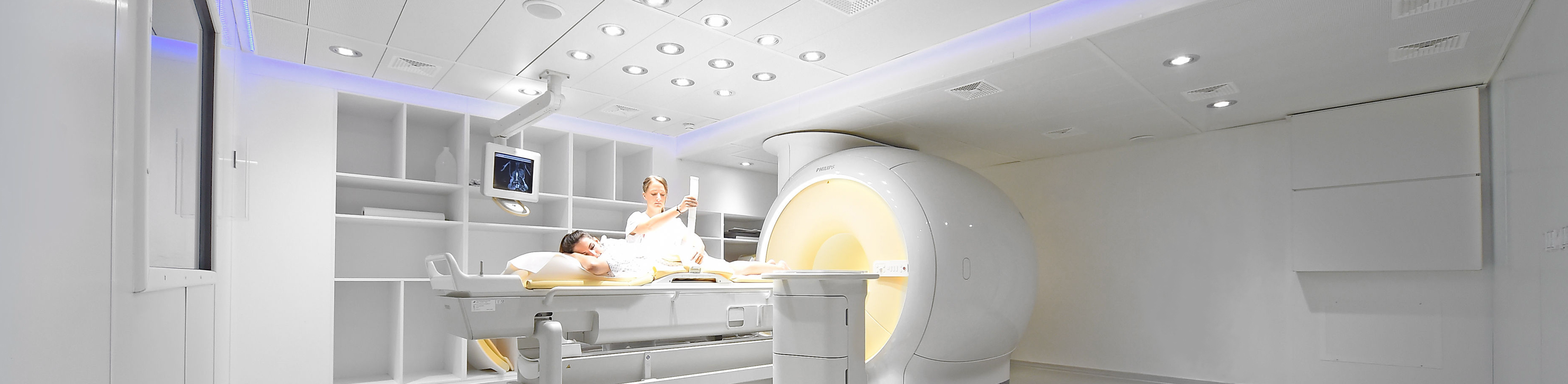
Imaging plays a decisive role in the diagnosis and assessment of many heart diseases such as myocarditis, metabolic disorders, circulatory disorders or congenital heart defects. We work closely with the University Hospital's cardiology, pediatric cardiology and cardiac surgery clinics, as well as with outpatient/external physicians.
The Institute of Diagnostic and Interventional Radiology has been certified as a focus center for cardiovascular imaging by the German Radiological Society since 2015. In addition to scientific and clinical issues, the training of future experts in cardiovascular imaging is a further focus. Training is provided by Q3 experts (Prof. Maintz as former chairman of the German Radiological Society's working group on cardiovascular diagnostics and Priv.-Doz. Dr. Pennig) of the German Radiological Society at the highest level.

Radiological diagnostics
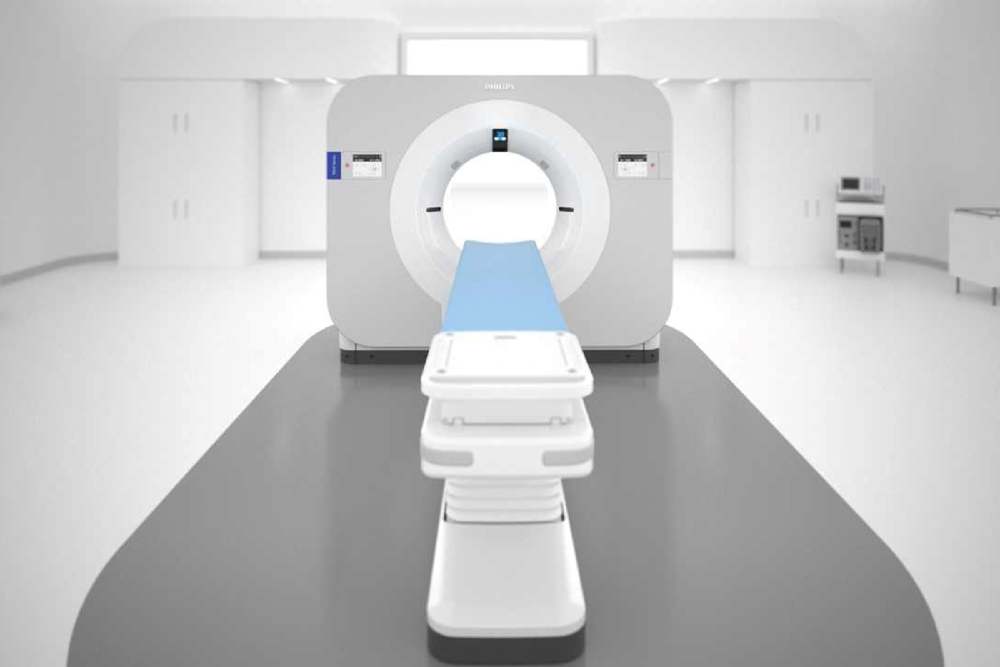
There are various imaging techniques for imaging the heart and the vessels close to the heart and their diseases. As part of clinical care, the Institute of Radiological Diagnostics offers cardiac computed tomography (CT) and cardiac magnetic resonance imaging (MRI), two extremely modern, non-invasive imaging procedures that can often provide the decisive diagnostic indication for a variety of cardiac diseases.
For CT diagnostics, the Institute of Radiological Diagnostics has four CT scanners of the latest generation at its disposal, including the CT 7500 from Philips as the latest generation of dual-layer dual-energy CT. In addition to the emergency diagnosis of acute chest pain using "Triple Rule Out" and the preoperative imaging of cardiac and vascular conditions prior to minimally invasive aortic valve replacement (TAVI), a particular focus of our clinic is non-invasive CT coronary angiography for external and hospitalized patients.
CT coronary angiography
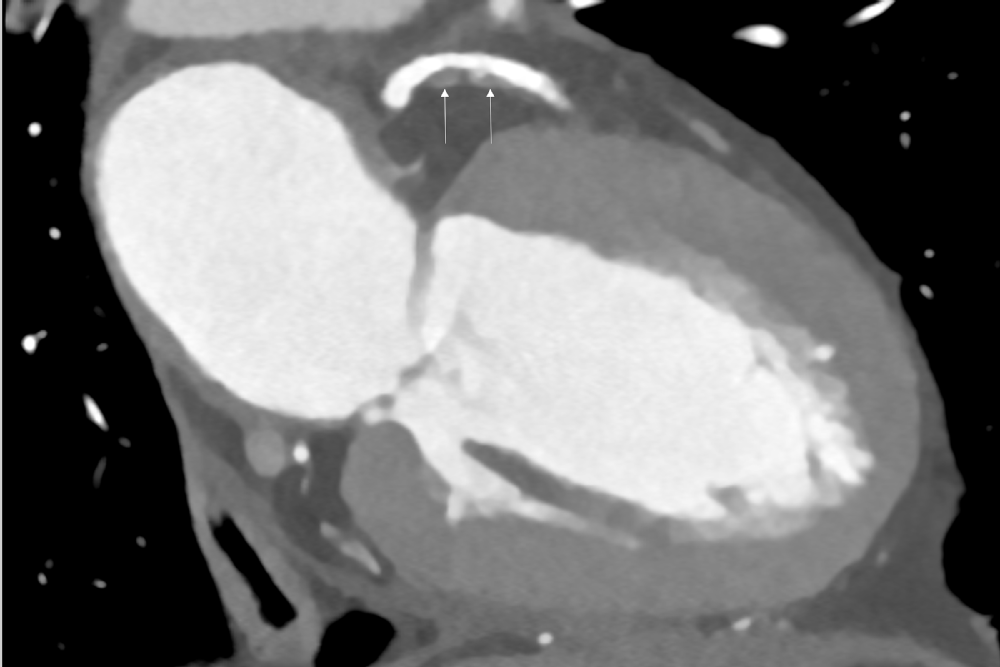
Compared to conventional, invasive coronary angiography (cardiac catheterization), CT coronary angiography offers stable, high-quality images with high diagnostic precision, significantly lower radiation exposure and a much lower complication rate. With CT coronary angiography and calcium scoring, the extent of calcification of the coronary vessels (total plaque load) can be quantified very precisely. From this, decisive indications of the risk of a serious cardiac event (e.g. heart attack) can be derived and therapy can be adapted accordingly. In addition, CT coronary angiography is able to show so-called "soft plaques", i.e. non-calcified deposits on the walls of the coronary arteries, which means that coronary heart disease can be diagnosed and treated earlier. If correctly indicated, coronary heart disease can be virtually ruled out by CT coronary angiography alone in the absence of calcifications and soft plaques, so that it can replace an invasive cardiac catheterization in such cases. In addition, good visualization and assessment of bypasses and coronary anomalies is possible.
Non-invasive imaging diagnostics (cardiac CT, cardiac MRI) have become significantly more important in the diagnosis of chronic coronary syndrome (formerly known as "stable angina pectoris") in recent years. According to the current guidelines of the European Society of Cardiology (ESC), CT coronary angiography is the diagnostic tool of choice for patients with suspected chronic coronary syndrome and a low to moderate pre-test probability of 5 to 50 percent in order to rule out relevant CHD (2024 ESC Guidelines for the management of chronic coronary syndromes).
Cardiac magnetic resonance imaging (MRI)
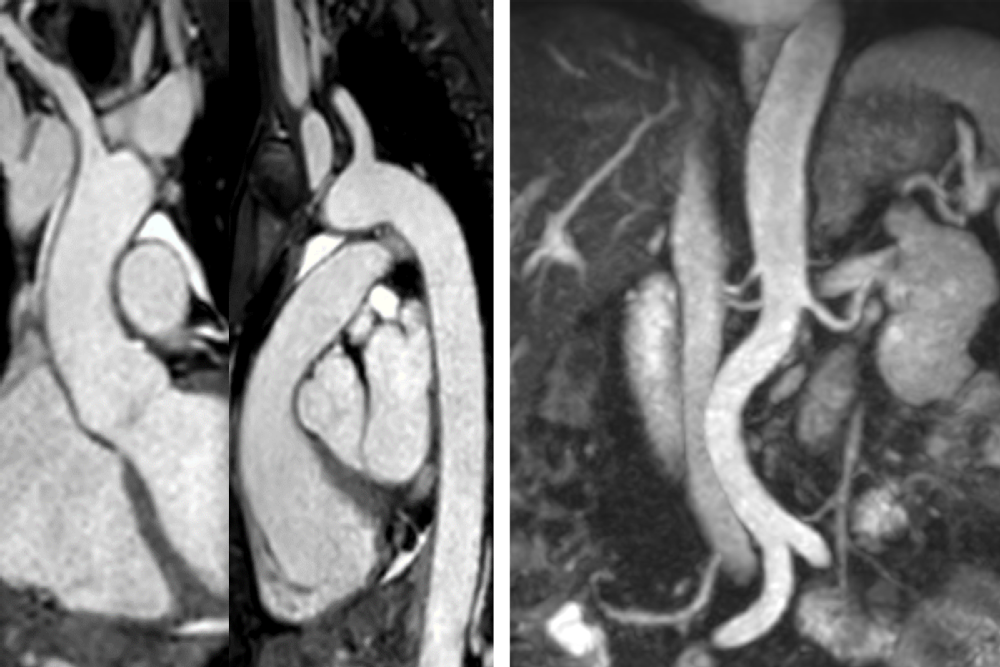
Cardiac MRI offers the possibility of parallel evaluation or assessment of myocardial morphology, function, non-invasive tissue characterization and flow analysis without the use of ionizing radiation. The entire spectrum of cardiac MRI is offered in clinical care, including
- Clarification of myocarditis (inflammation of the heart muscle) and pericarditis (inflammation of the pericardium), for which MRI is the imaging method of choice
- "Stress MRI" of the heart: According to the current guidelines of the European Society of Cardiology, stress MRI is the diagnostic method of choice for patients with suspected chronic coronary syndrome and a moderate to high pre-test probability of >15-85% (2024 ESC Guidelines for the management of chronic coronary syndromes). Stress MRI can also help to determine the hemodynamic relevance of a stenosis on cardiac CT. This means that a cardiac catheter examination via the groin or arm (invasive coronary angiography) can often be avoided.
- Diagnosis and assessment of the course of a heart attack
- Clarification of the cause and assessment of the severity of cardiac sufficiency
- Clarification of cardiomyopathies (e.g. dilated or hypertrophic cardiomyopathy) or changes in the heart muscle in the context of systemic diseases, e.g. rheumatic diseases or other systemic diseases (e.g. amyloidosis)
- Exclusion and diagnosis of cardiac tumors/thrombi
- Diagnosis and assessment of congenital heart defects
- Diseases of the heart valves - stenoses and insufficiencies of all four heart valves and their haemodynamic effects
Another focus is the use of innovative accelerated sequences in cardiovascular MRI. These allow, for example, the imaging of the thoracic and abdominal vessels, e.g. in patients with congenital heart defects and connective tissue diseases, in a short examination time of around 5-10 minutes without the administration of contrast medium.
At Cologne University Hospital, we are also able to perform cardiac CT and cardiac MRI on patients with statutory health insurance without incurring additional costs.
Contact us
If you have any questions, you are welcome to contact our heart specialists by e-mail at radiologie-herz@uk-koeln.de.
If you already have a referral for a cardiac MRI or cardiac CT, you can make an appointment.
Further information
- Information about our equipment
- Find out more about research in pediatric radiology at our institute
- Are you a referring physician or do you need a second opinion? Find out more about the options for referring physicians
- Information on consultation requests from practices or external hospitals