Stroke treatment
If a blood vessel that supplies the brain is blocked by a clot, this can often be reopened using neurointerventional procedures. It is important that this is done quickly. This is why a stroke is an absolute emergency. If there is a sudden painless paralysis, the emergency services must be called immediately. The sooner the corresponding area of the brain is supplied with blood again, the better the chances of a complete recovery.
Not every patient can benefit from such an intervention. Therefore, prior selection with computer tomography or magnetic resonance imaging is necessary.
The patient is under general anesthesia during interventional stroke treatment. A catheter is inserted through the access in the groin up to the occlusion in the head or neck vessels. The clot is then passed through with a fine wire (diameter 0.36 mm) and then removed with a stent. At the same time, clot material is aspirated via the catheter.
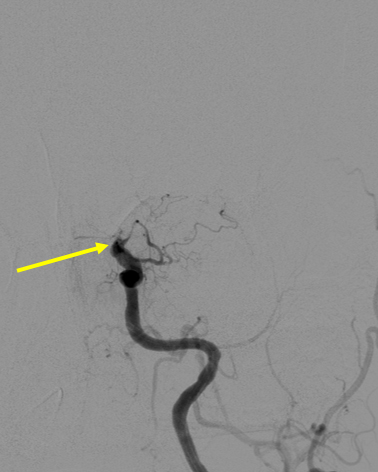
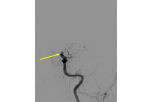
Figure 1: Catheter angiography shows a rupture of the left middle cerebral artery (arrow), which leads to a circulatory disorder in the affected area of the brain.
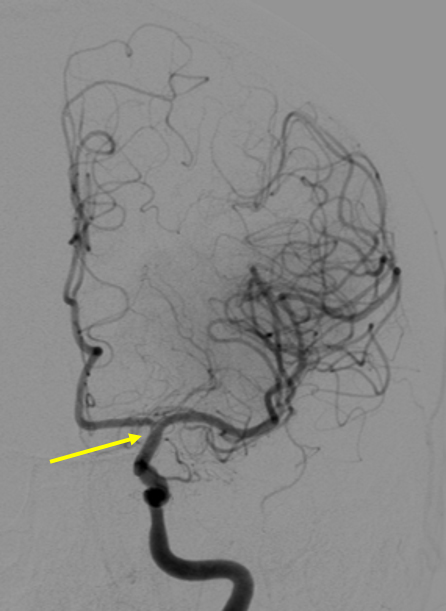
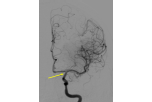
Figure 2: After removal of the thrombus using catheter angiography, the entire left middle cerebral artery is now supplied with blood again (arrow).