
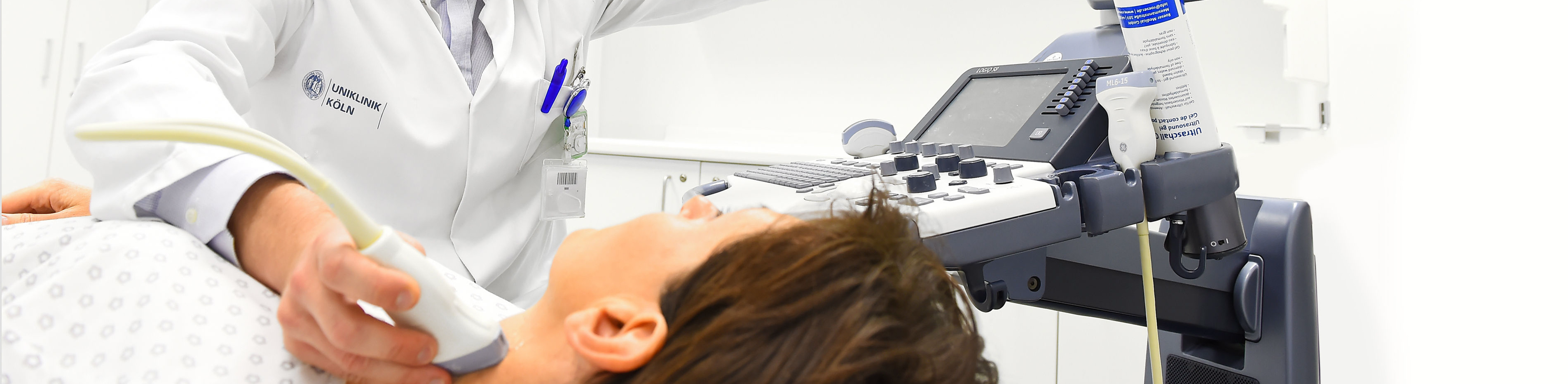
Ultrasound / Sonography
Sonography, colloquially known as ultrasound or ultrasound examination, is an imaging procedure that is very popular due to its many advantages and is frequently used in everyday clinical practice. Sound waves are emitted into the body by a probe above the human hearing threshold and received again after they are reflected within the body. As different types of tissue reflect the sound waves to different degrees, an image can be generated from the sound waves received. Ultrasound is largely free of side effects, does not involve radiation (in contrast to X-rays, for example), is very fast, inexpensive and can be used for a whole range of structures, e.g. kidneys, thyroid, breast, uterus, heart, spleen, etc. Ultrasound is used both in diagnostics and follow-up as well as for live imaging during various procedures.
Contact us
Would you like to make an appointment, do you have questions or would you like to send us important information?
Private outpatients and patients with statutory health insurance +49 221 478-82006
Examinations take place
- on the first floor of the Diagnostic and Therapy Center (DTZ-West), Building 18a, Room 006
- in the Central Emergency Department (ZNA), Building 8a, Rooms 117 and 124.
Frequently asked questions
How can I prepare for the examination?
Sonography is generally a quick and uncomplicated examination procedure. However, please note that you must fast before undergoing an abdominal ultrasound (this also applies to smoking) so that all organs can be adequately assessed. Therefore, do not eat anything on the day of the examination and six hours before the examination.
Please try not to eat any flatulent food on the day before the examination, as otherwise the ability to assess some organs may also be restricted by air overlay.
How does the examination work?
The examination usually takes between 15 and 45 minutes (depending on the area being examined and the question being asked). To ensure that the sound waves are transmitted better, the transducer or the examination area is coated with a gel. The examiner gives the patient breathing commands so that organs located in the abdominal cavity can be examined without movement or so that various phenomena can be assessed to evaluate the blood flow. The examination is usually performed with the patient lying down.
Further information
- Information on our areas of focus
- Technical details about the equipment of our institute